Origin Story
How it all began ...
Covid lockdowns saw many of us working online more, relying on digital tools to create virtual offices in order to work, stay connected, and deal with the confusion. This period starkly highlighted the deep inequalities around getting online, the digital gender divide, and the many “unjust” digital practices that exist and often go unchecked.
During this time, I was the Director of NEoN Digital Arts, working to deliver an annual festival of digital and tech-driven art. Coming out of the Covid trauma, I began to question my own digital entanglement and its impact on me, on society, and on the planet. At the same time, as an arts organisation, we needed to reconsider our position in the art world, its privilege, and its responsibility to all those who come into contact with it.
In 2021, NEoN delivered its annual festival under the theme Wired Women, exploring the digital gender divide and the invaluable contribution of women and non-binary artists in shaping digital and tech art. The theme was inspired by the book Wired Women: Gender and New Realities in Cyberspace by Lynn Cherny.
Written in 1996, this book brings together a collection of essays by women examining what women were doing on the internet at that time. Reading it today, it reflects many of the same societal complexities we still grapple with, love, relationships, censorship, gender, and hostility. Sadly, all these years later, anonymous online hostility still exists and is still mostly directed at women.
The festival was a celebration of works that commented on and directly challenged our digital lives, including our online behaviours, digital ethics as a whole, and the urgent need to rethink wider policies and values. NEoN also sought to rethink its own digital practices, asking: How could a digital practice become more ethical? And what does it mean to say “digitally ethical”?
I don’t buy Nestlé, but I use Google — can you help?
In 2022, I reached out to Femke Snelting with this question. This led to NEoN inviting The Institute for Technology in the Public Interest (TITiPi) to “audit” their daily computational operations, with a view to imagining other environmentally and socially “just” digital practices as part of a broader rethinking of internal policies and values.
In early March 2022, the idea of the Counter Cloud project began.
Next origin story blog coming soon …
By Donna Holford-Lovell
https://donnahl.uk/
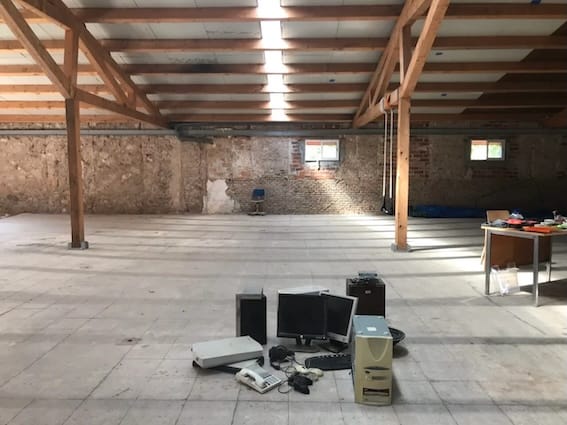
Feature Image Credit: Getting in to tech workshop at the TransHackFeminist (THF!) Convergence, Calafou, Spain 2022, by Donna Holford-Lovell
This communication has been written by a neurodiverse person. If you have any difficulty understanding the meaning of any sentences or words, please get in touch for clarification. Your accommodation of specific learning disabilities (SLD) is greatly appreciated.